


 Svenska
 English

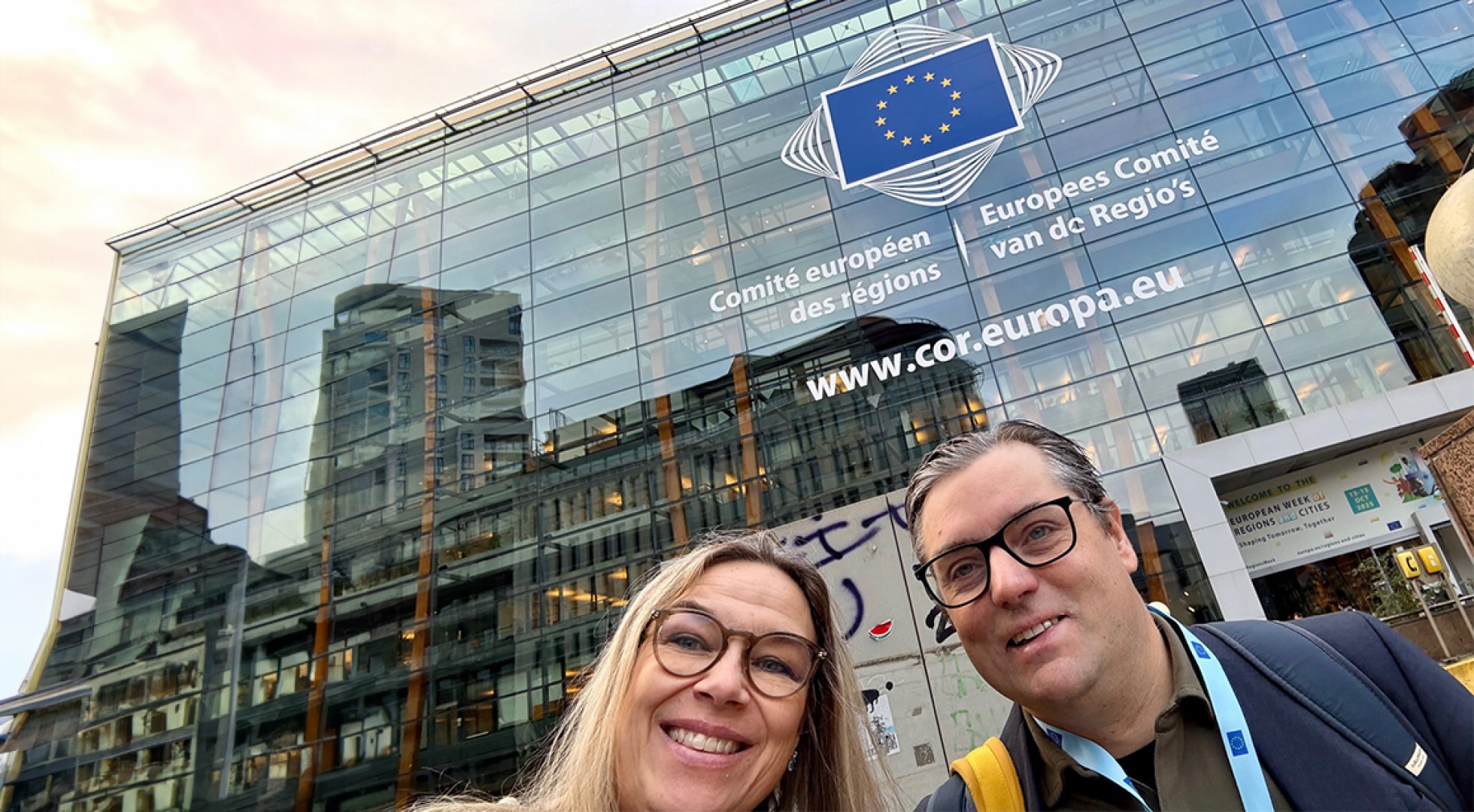
Many lessons learned at the European Week of Regions & Cities
During this year’s European Week of Regions & Cities, the Swedish Lapland Visitors Board participated in several program items that brought together decision-makers, regions, and organizations from all over Europe. The October week in Brussels provided important opportunities to highlight regional perspectives and take part in current political processes linked to the tourism industry and regional development.
During the seminar “Better Balanced Tourism in Europe’s Regions”, organized by NECSTouR (Network of European Regions for Sustainable and Competitive Tourism), member regions and top politicians from the EU met to discuss the future of tourism policy. The starting point for the dialogue was the urgent issue of better management of tourism flows and sustainable tourism development at the regional level, which concerned both strategies and concrete, inspiring examples of measures.
The political panel discussed, among other things, the work on the upcoming update of the EU’s tourism strategy. The panel included:
- Maja Bakran, Deputy Director-General, DG MOVE (The Directorate-General for Mobility and Transport)
- Elena Kountoura, Member of the European Parliament and Vice-Chair of the TRAN Committee (Transport and tourism)
- Daniel Attard, Member of the European Parliament and rapporteur for the TRAN report on European tourism 2025/2120 (INI)
- Nikolina Brnjac, Member of the TRAN Committee and rapporteur for the report “Improving connectivity, preserving cultural heritage and driving local excellence in European tourism: destination management and regional tourism growth.”
During the seminar, Julie Reimann from the OECD also presented parts of the upcoming OECD report on tourism trends and policies 2026.
A number of regions shared concrete examples of visitor management and regional measures:
- Centre-Val de Loire (France)
- Skåne (Sweden)
- Madrid (Spain)
- Nature Tourism Flanders (Belgium)
- Amsterdam (Netherlands)
Visiting the fair area provided an opportunity to learn more about a number of ongoing EU projects that presented their work and experiences. Here there were examples of everything from digitization and sustainability projects to regional development and statistical tools.
The visit also provided an opportunity to meet representatives from Eurostat, which provides significant regional statistics and data used in development work within the tourism industry. In the fair area, there were also actors working on the update of the EU’s tourism strategy, which provided valuable insights into the direction and timetable of the work.
During the week, the Swedish Lapland Visitors Board also participated in NSPA’s seminar—a program item that highlights challenges and opportunities for Europe’s northern and sparsely populated regions.


