


 Svenska
 English
Sustainable growth in sparsely populated regions in focus during EU week in Brussels
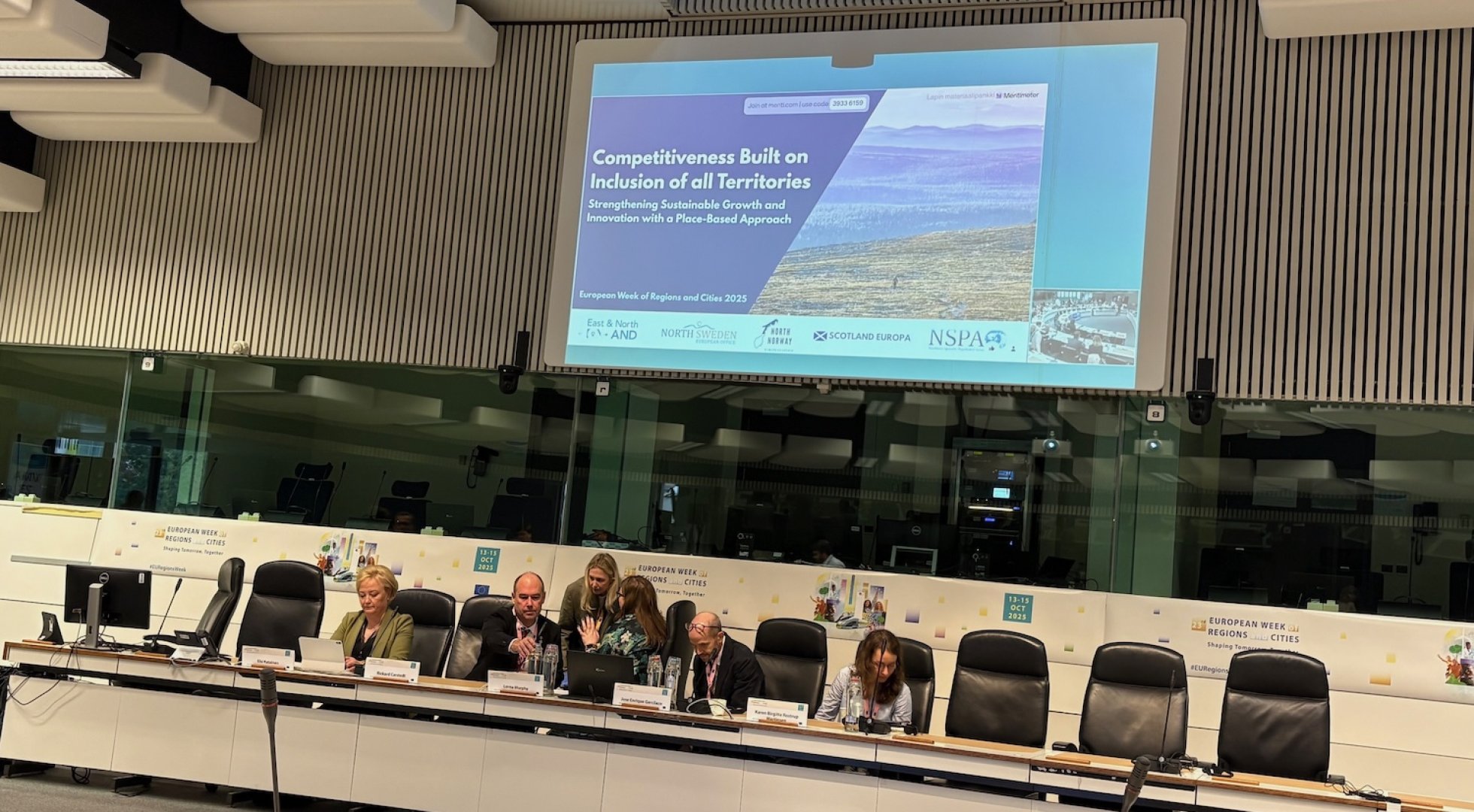
How can sparsely populated regions in northern Europe continue to be attractive, innovative and competitive – even when the population is declining? This was one of the main questions when representatives from Northern Sparsely Populated Areas (NSPA) and Scotland Europa gathered in Brussels during the European Week of Regions and Cities.
The seminar, titled “Competitiveness built on inclusion of all territories – strengthening sustainable growth and innovation with a place-based approach”, brought together politicians, researchers and regional representatives to discuss how EU cohesion policy can help unlock the potential of Europe’s most remote areas.
From Swedish Lapland Visitors Board, CEO Annika Fredriksson and Oskar Hederyd, Strategic Partnership Manager, participated together with representatives from Region Västerbotten, OECD, the European Parliament and Energi i Nord, among others.
“We wanted to participate to gain different perspectives and contribute to the dialogue on how tailored measures can support sustainable growth and innovation in sparsely populated regions like ours,” says Oskar Hederyd.
On stage were Rickard Carstedt from Region Västerbotten, MEP Elsi Katainen, José Enrique Garcilazo from OECD and Karen B. Rostrup Martinsen from Energi i Nord, among others. OECD presented insights from its latest report on rural areas and the European Arctic region – focusing on how megatrends such as demographics, environment, technological development and globalization affect northern regions.
The discussion centered around the need for long-term, place-based policies that both strengthen competitiveness and promote social cohesion. Rickard Carstedt emphasized that EU cohesion policy is crucial for regions to be able to drive innovation and development. And that funding from cohesion policy is often the money that regions actually have access to. It is with the help of these funds that we have been able to build some of Europe’s best broadband networks and create conditions for innovation even in remote areas, he argued.
For Swedish Lapland Visitors Board, the seminar was a confirmation that issues related to regional development, skills supply and attractiveness are closely linked to European policy.
“What I take away from Brussels is how important it is that the EU continues to support development projects in less populated parts of the union going forward. Conditions vary greatly, and therefore funding needs to come through the regions – those who best know their own needs. Cohesion policy is absolutely crucial for the EU to be competitive, especially in an uncertain geopolitical situation”, says Oskar Hederyd.


