Svenska
 English

Sami conference in Inari highlighted authenticity and ownership
An international conference on indigenous tourism in Inari brought together experts, tourism entrepreneurs and researchers from Sápmi, Canada, New Zealand and Greenland to discuss how tourism can empower rather than exploit indigenous cultures.
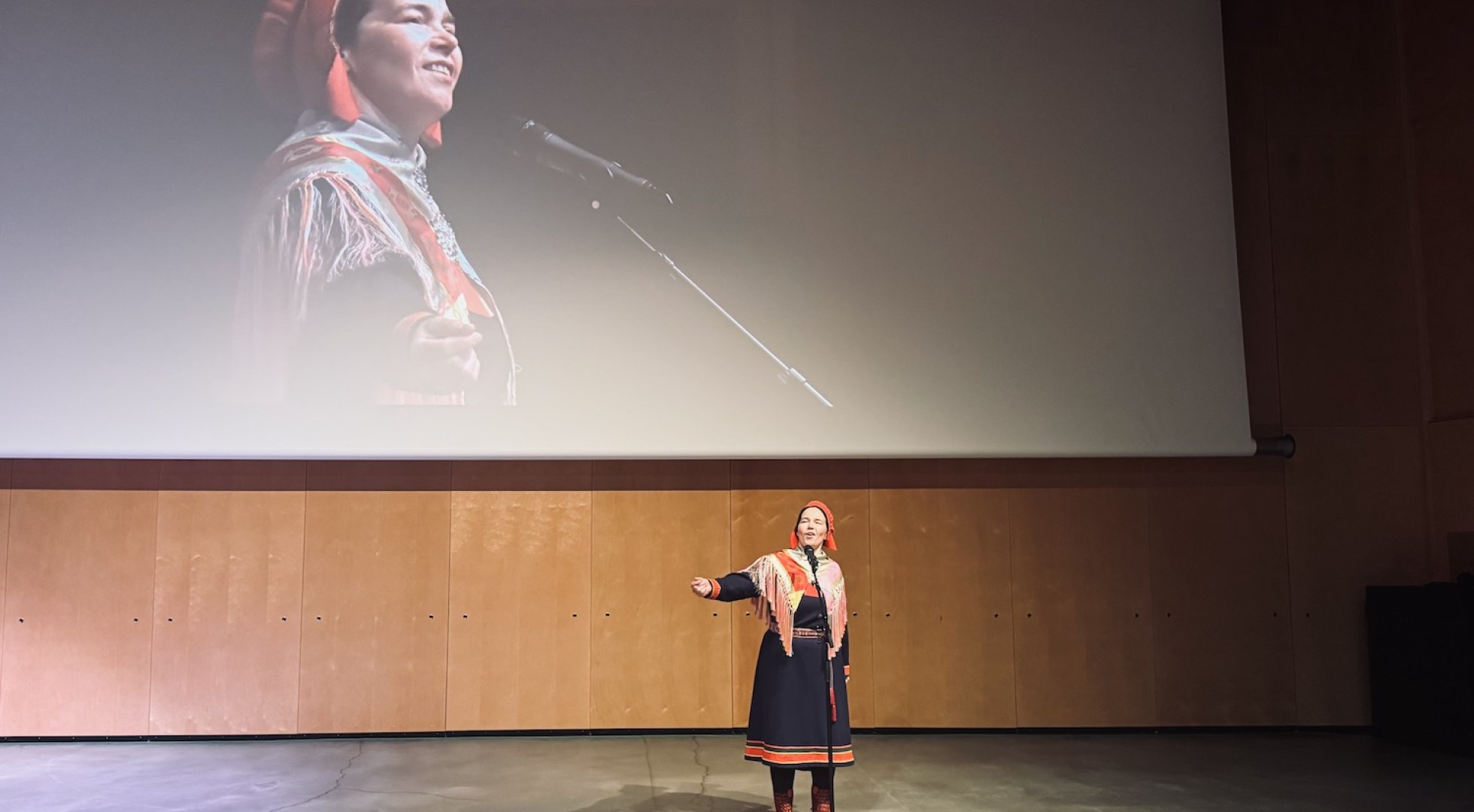
In the top photo: musician Anna Morottaja welcomes the first day of the conference with Sámi music from Inari.
The European Indigenous Tourism Conference in Inari, the first WINTA conference in Europe, was organized by the World Indigenous Tourism Alliance (WINTA), the University of Lapland and the Finnish Sámi Parliament. The focus was on ethically sustainable tourism and many of the speakers highlighted how tourism can be a tool for cultural empowerment instead of exploitation and the importance of acting today for future generations.
“We had planned to organize a study tour for Sami entrepreneurs working in the region. When we heard about this conference, we seized the opportunity. The study trip, combined with the conference, was just as good as we had imagined, and there were many satisfied participants who sat on the bus home”, says Malin Jonsson of the Swedish Lapland Visitors Board, who helped organize the study trip.
Certification as protection
A recurring theme among speakers was the need for certification to protect Sámi culture from misrepresentation. In Finland, since the 2018 Sámi Ethical Protocol, there has been a decrease in misinformation about the Sámi. They are now working on certification schemes that benefit all parties – nature is protected, revenue goes to the Sámi and visitors have authentic experiences.
Christina Hætta from the Sami Parliament spoke about the “Sámi Duodji” and “Sámi Made” labels, which aim to protect genuine Sami crafts from competition from fake products. “There is a challenge in the sale of Sámi-inspired products that makes it difficult for genuine Sámi crafts entrepreneurs to survive. The labels become a stamp of quality and a symbol of authenticity that gives the buyer the right to know that they are buying genuine Sámi crafts.
Youth voice and anxiety about the future
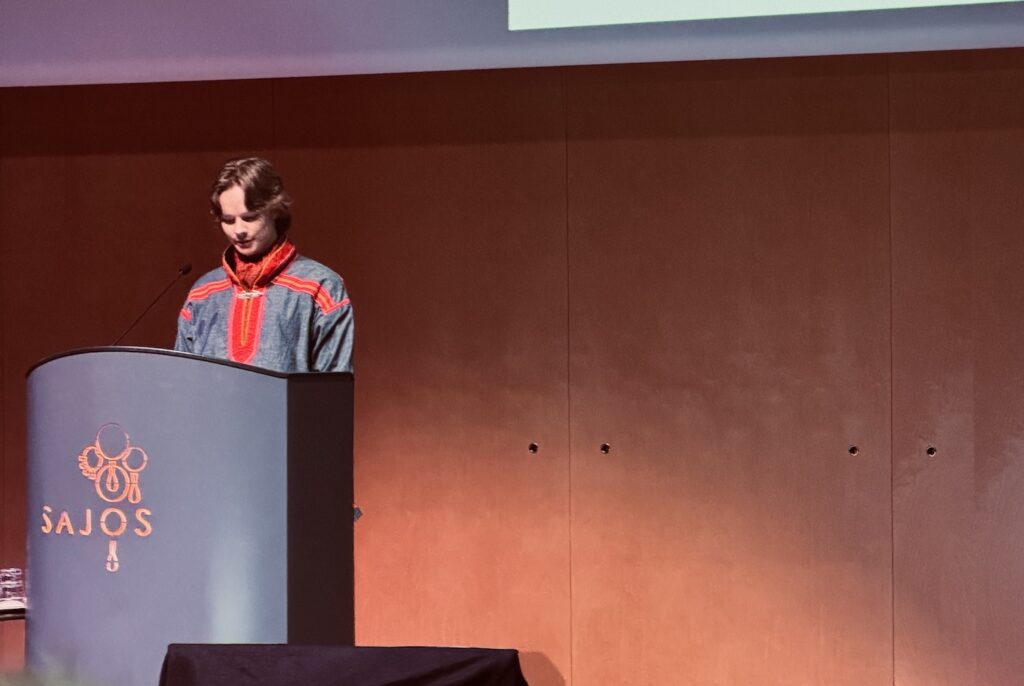
A strong voice came from the Finnish Sámi Parliament’s Youth Council through Niila-Juhán Valkeapää, who pointed out the paradoxical situation:
“We see what happens when tourism is done wrong, but we young people, whose future is most affected are not here today in the audience”.
His speech on how young people are not too young to lead received a standing ovation. Niila-Juhán highlighted, among other things, the need for tourism development to be led by indigenous peoples themselves, shaped by their values and based on real consent, not symbolic consultations.
“When we talk about tourism, sustainability or development, we are talking about choices. And the choices made today on land use, climate and cultural visibility do not create short-term consequences, they will affect generations”.
“It is we young people who will live with the long-term consequences. That’s why we need to be part of these conversations”.
Without action, respect means nothing
Storyteller Suvi West, who also hosted the event, highlighted the storytelling dimension of tourism and the responsibility that comes with representation. She emphasized that not all stories can or should be told in public, and that some places and stories must remain sacred.
West introduced the concept of “Lobi bidin” – asking permission from people, spirits and nature before telling a story. Without action, respect means nothing, she said.
International perspectives
Sébastien Desnoyers-Picard from Canada shared experiences from the world’s only existing certification system for indigenous tourism. His message was clear:
“People miss the boat when they exclude indigenous peoples”.
The Indigenous Tourism Association of Canada currently has over 1,300 members who receive assistance through the organization with both marketing and development of their tourism businesses.
From New Zealand, John Barrett told of four generations with the same vision on Kapiti Island, where tourism has become a tool for both economic development and cultural recovery.
In Greenland, tourism is seen as a path to independence. Researcher Carina Ren described how the indigenous people of the island have long been told about rather than told themselves – through tourism, the people see the chance to own their story. The goal is to increase the share of tourism from the current 5-7% to 40% by 2035. Ulunnguaq Markussen from the University of Greenland talked about the fears and hopes of the local population. They see potential in jobs and income, but are also worried about outsiders coming in and taking the profits. Here, too, the importance of being able to do things themselves on their own terms is highlighted.
Local challenges
Several speakers highlighted concrete threats to the Sami way of life. Guttorm Utsi criticized the Norwegian government’s plans for wind power in reindeer herding areas as “green colonialism” and pointed out the irony of apologizing for historical abuses while threatening current livelihoods.
The future of tourism
The conclusion of the conference was clear: indigenous peoples do not have to be a “product” or use capitalist language. Instead, they can continue to be storytellers who, through sustainable Indigenous tourism, can reclaim power over their own stories and preserve traditional ways of life.
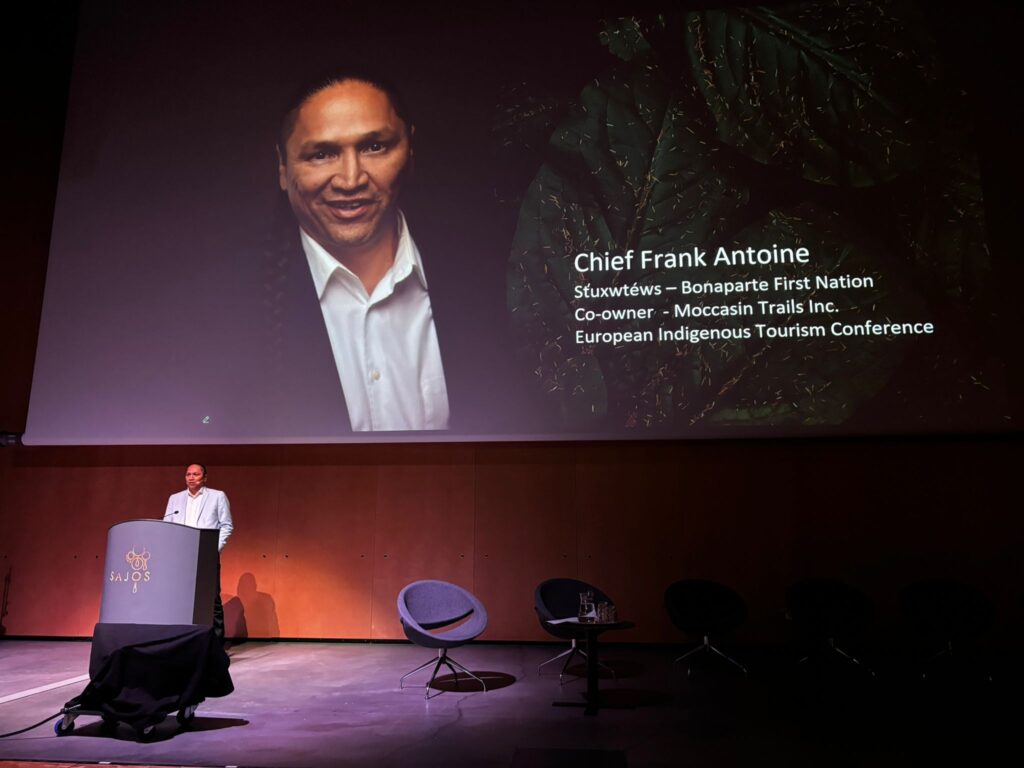
Chief Frank Antoine, WINTA board member and Chief of Bonaparte First Nation, put it:
“We are not a sector or a product. We are a place. Everything goes back to the culture”.
Several participants also highlighted the importance of always taking only what you need, and the importance of giving back to the place. Something that is increasingly being talked about even outside of indigenous tourism within the concept of regenerative tourism.
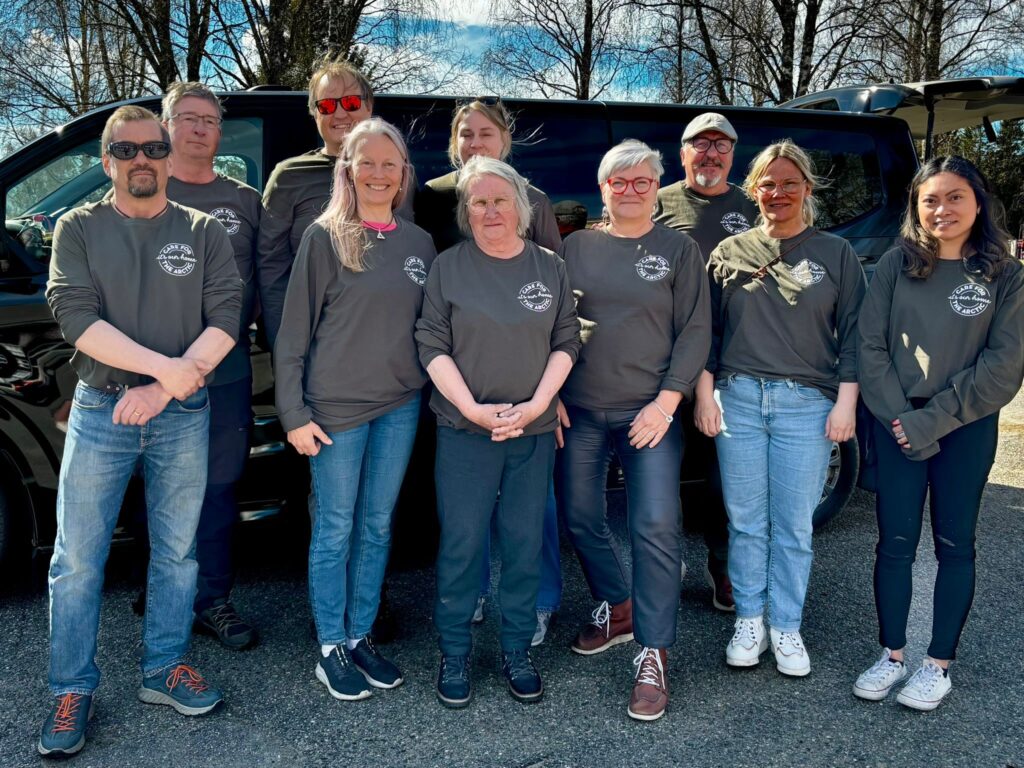
The tourism industry from Arctic Sweden was represented by several Sámi entrepreneurs who participated to exchange experiences, make contacts and take home new perspectives. Here are some voices from the trip:
Ylva Sarri, Scandinavian Sámi Photoadventures:
“It is rewarding to meet colleagues and friends in the industry, because it is valuable to exchange experiences, give advice and tips, get advice and tips. To reflect on your own business and to see and understand the businesses of others.
Despite the fact that we are on different continents, we are grappling with many of the same problems in terms of the exploitation of culture, history and land. I think it would be powerful if we could achieve a worldwide quality label. I think that the road there can be long. Firstly, to achieve it and secondly, to have a worldwide impact. But if we get there, it will be really cool,” says Ylva about the various presentations during the conference.
“By meeting and seeing the work of other indigenous peoples in the tourism industry creates a common feeling that we can support each other, which is beneficial for the entire tourism industry”
Lennart Pittja, Sápmi Nature, and member of the Swedish Lapland Visitors Board:
“I have been involved with WINTA since 2012/2013 or so. And throughout that time I have had the opportunity to participate in other parts of the world at various events/networking meetings/conferences where indigenous people gathered to network, gather and share knowledge, inspire and be inspired. But I have never been able to attend a similar meeting in Sápmi. So it is so very nice to finally get to do it! For my part, it has always given me a lot of strength to meet other tourism entrepreneurs and exchange experiences, so I imagine that more entrepreneurs in Sápmi hopefully experience the same thing.
A strong feeling I take with me is that there is a need for more collaboration between Sámi entrepreneurs – in Sápmi across borders and also globally.
I have gained more knowledge through my participation and above all I have gotten to know and hang out with many talented and strong people in Sámi tourism but also from Kalaallit Nunaat, Aotearoa, Bonaparte First Nation and Huron-Wendat Nation.
Then I carry with me a pride that we were so many Sami entrepreneurs from the Swedish side who participated in the EITC, and I feel grateful for the work that the Swedish Lapland Visitors Board has done in this”.
Marita Sikku, Dalvvas:
“I take with me the importance of working together for sustainable tourism development in the hospitality industry – especially from an indigenous perspective. Listening to speakers from all over the world, and doing it in Sápmi, was extremely inspiring and gave me many new thoughts, ideas and perspectives to take with me in my work. Doing a quality label in this area would be great but how? It is always good to have a minimum level that everyone must adhere to”.
Pia and Henry Huuva, Huuva Hideaway:
– So nice to be part of this journey – the conference days, the inspiration, insights into how it works elsewhere in indigenous tourism and how to anchor and communicate. Lots of inspiration and opportunities to take home! And the conversations! With Sami, Maori, First Nation and other indigenous peoples in Canada and Greenland.
It was so good that we went as a group of entrepreneurs from Swedish Lapland. We really had time to talk, exchange ideas and build stronger ties – it feels like something we will benefit from in the future”.
Lotta Svensson, Båtsouj forestry collection center:
“What made the deepest impression on me was Frank Antoine from Canada, who has a strong personality with an aura that rubbed off on me. WINTA is based on the traditions and knowledge of the world’s indigenous peoples, and they talked about the importance of the profits also ending up with the indigenous peoples, I and some others thought about how we should take it further. Sweden is not as much at the forefront as Finland and Norway. We wondered if we could somehow secure funding through an Interreg project, and then move on to action”.
Hanna Lejon, Nutti Sámi Siida:
“The European Indigenous Tourism Conference EITC 2025 further inspired me, gave me more knowledge and insights on how to continue our work and activities in the future. From our communication before the guest visits us, to ensuring they have an authentic and sustainable experience during their visit. We are both a representative and ambassador for our company and also the Sami culture, where we get the opportunity to tell our story on our terms. And thus contribute to spreading knowledge about our history and culture”.
It’s not just about experiences – it’s about justice
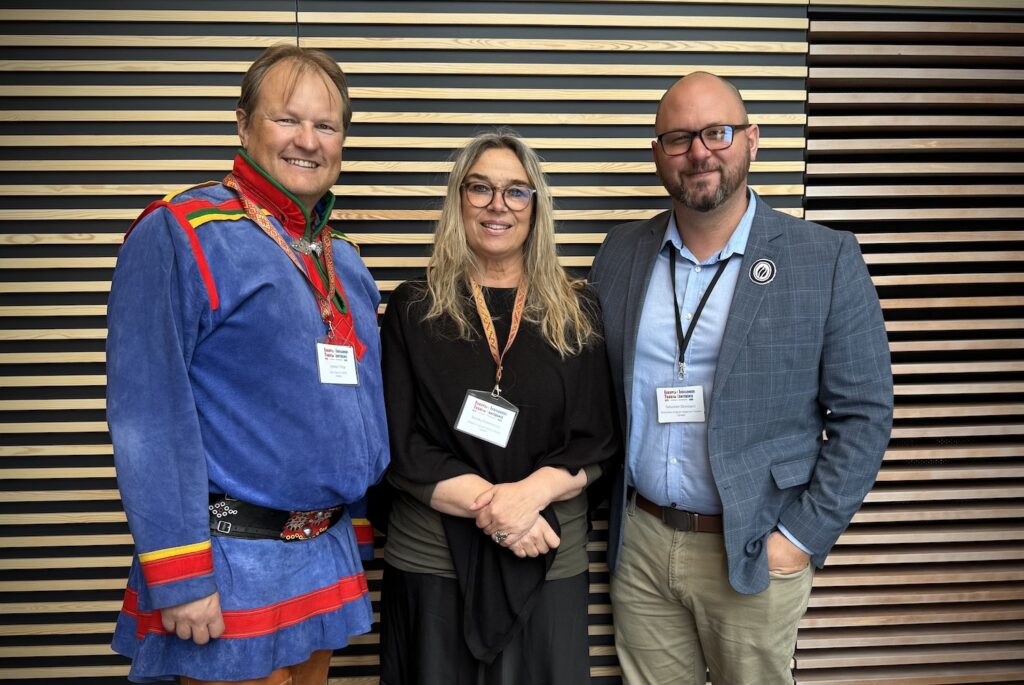
“The conference clearly showed that indigenous-led tourism is not just about experiences – but about justice, faith in the future and long-term protection of both culture and nature. And perhaps above all: about the right to define who you are and how you want to be represented,” says Annika Fredriksson, CEO of the Swedish Lapland Visitors Board:
“Sami actors in the tourism industry have been, are and will continue to be very important for the continued development of tourism in Norrbotten, Sápmi and Sweden. Indigenous cultures have much to contribute to the sustainable management of common tangible and intangible assets”.