


 Svenska
 English
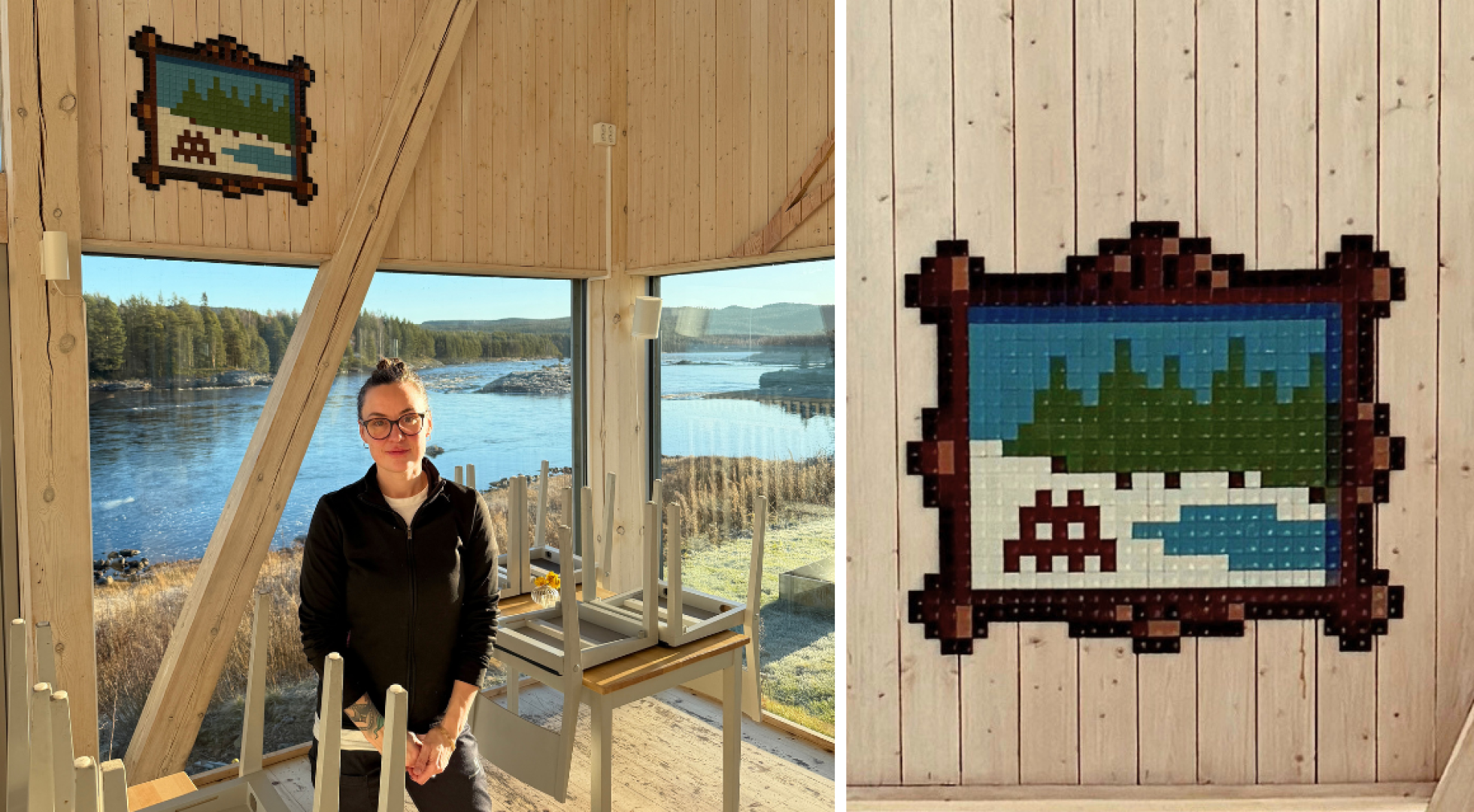
Lilian Fors driver Kattilakoski restaurang tillsammans med sin man Taz Huggins. Hon uppskattar att ett tjugotal besökare, främst från Frankrike, kom för att fotografera Invaders mosaik under de första två–tre veckorna efter att verket blev känt.
French art invasion creates new reasons to visit Arctic Sweden
They fly in, rent a car, and travel between small mosaic artworks on house façades, bridges, and locations out in nature. French street artist Invader has visited Arctic Sweden and left behind 89 mosaic works, something that has already drawn international art hunters to the region. At Kattilakoski restaurant in Tornedalen, the interest is noticeable both at the door and around the dinner tables.
Street artist Invader has left behind 89 different mosaic works across the region. For his followers, the works are part of an international art hunt, where every new discovery can become a reason to travel. Through the artist’s own app, FlashInvaders, participants photograph the mosaics on site, collect them in a digital gallery, and earn points.
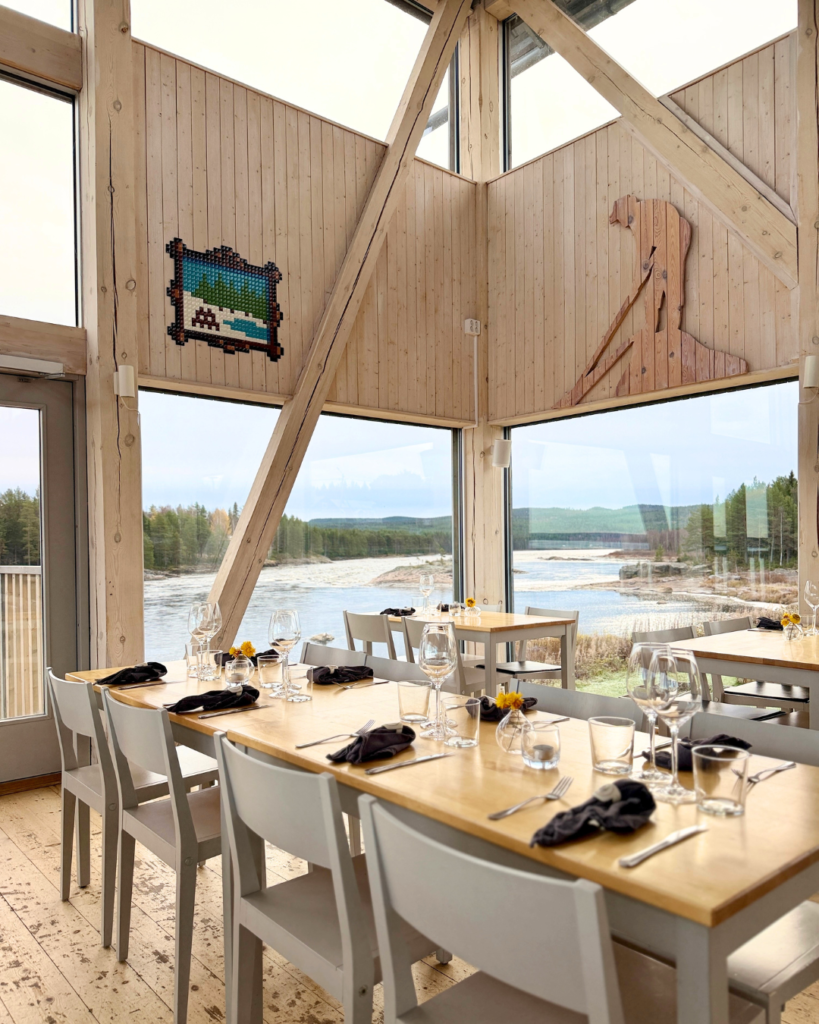
At Kattilakoski restaurant in Niskanpää, one of the works is unusually located indoors, above a window facing Finland. In the roughly three weeks since it became known that the mosaic was there, co-owner Lilian Fors estimates that around twenty people have come to photograph it. Most have been French-speaking, some German-speaking.
“The people I’ve met have traveled here solely to see these works. They flew up, rented a car, and drove around. They probably wouldn’t have come here if it weren’t for the installations,” says Lilian Fors.
One visitor had already photographed 27 works and hoped to reach at least 40 before heading home. Others said they would continue on toward Pajala and Överkalix. At one point, two or three groups arrived within just a few hours of each other.
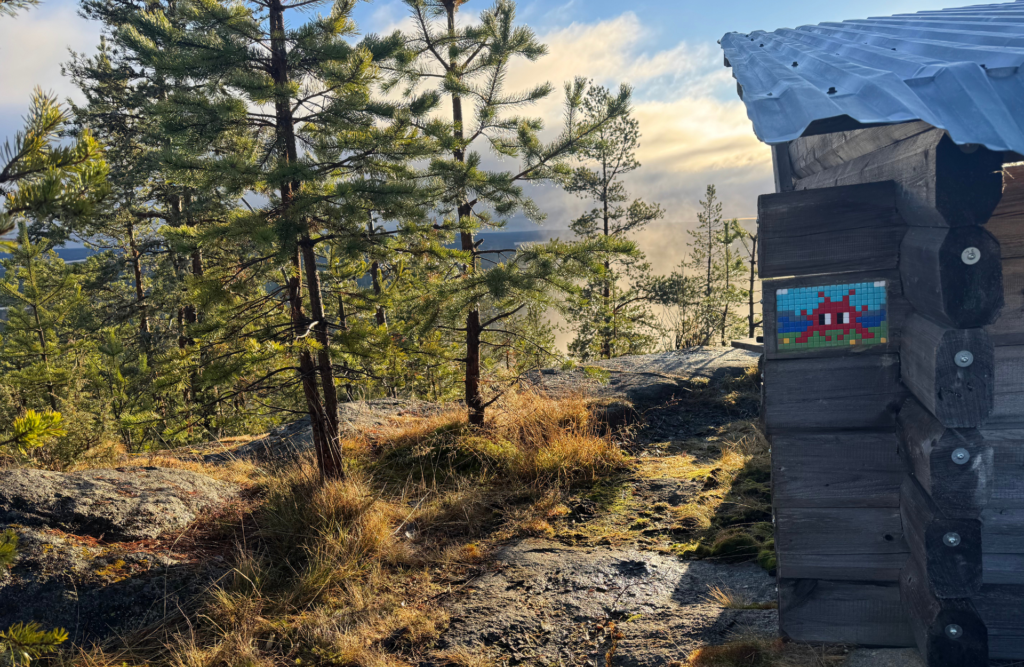
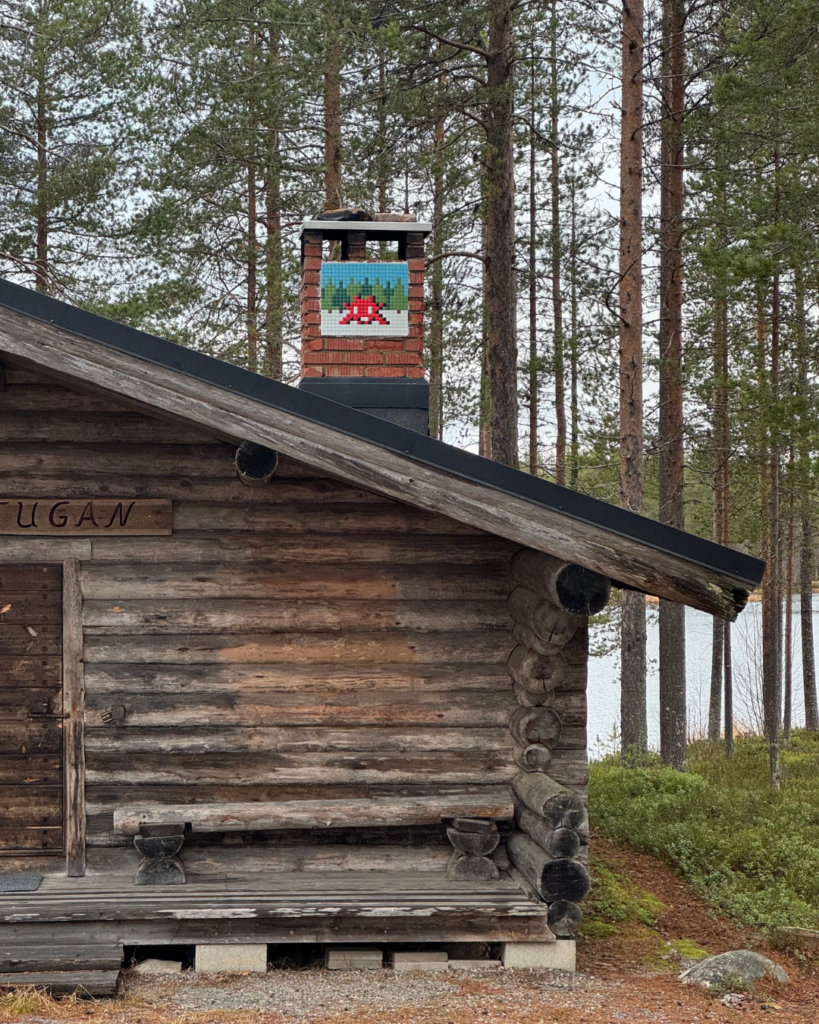
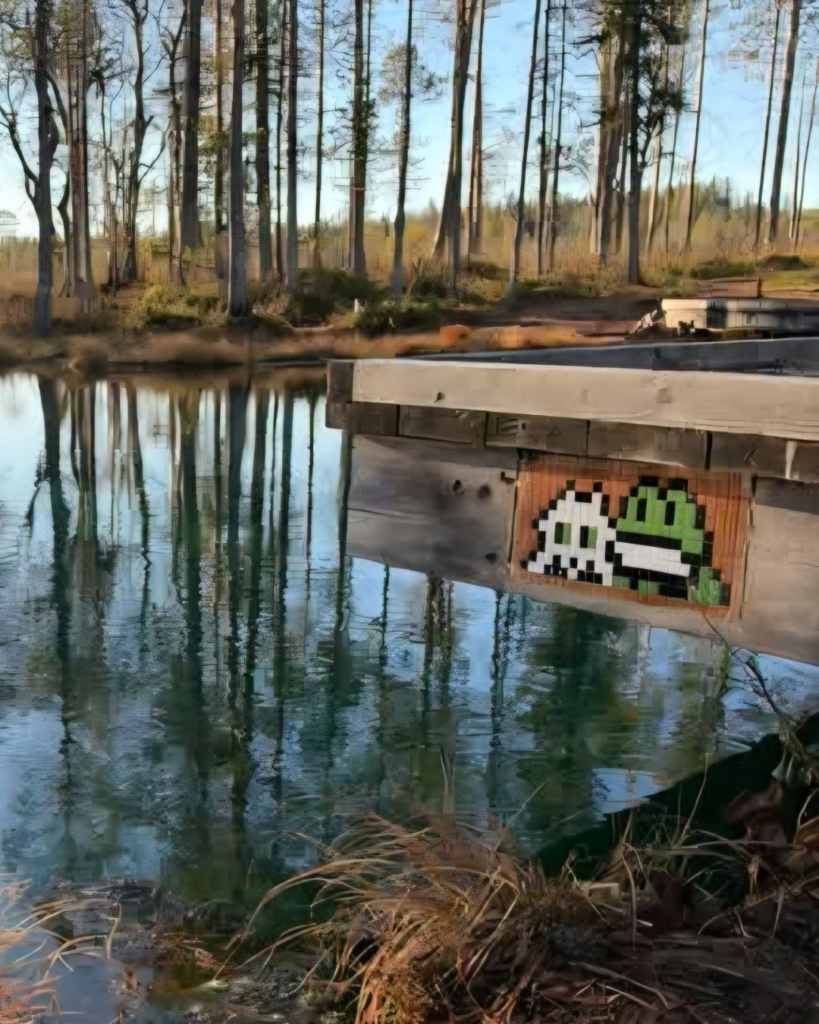
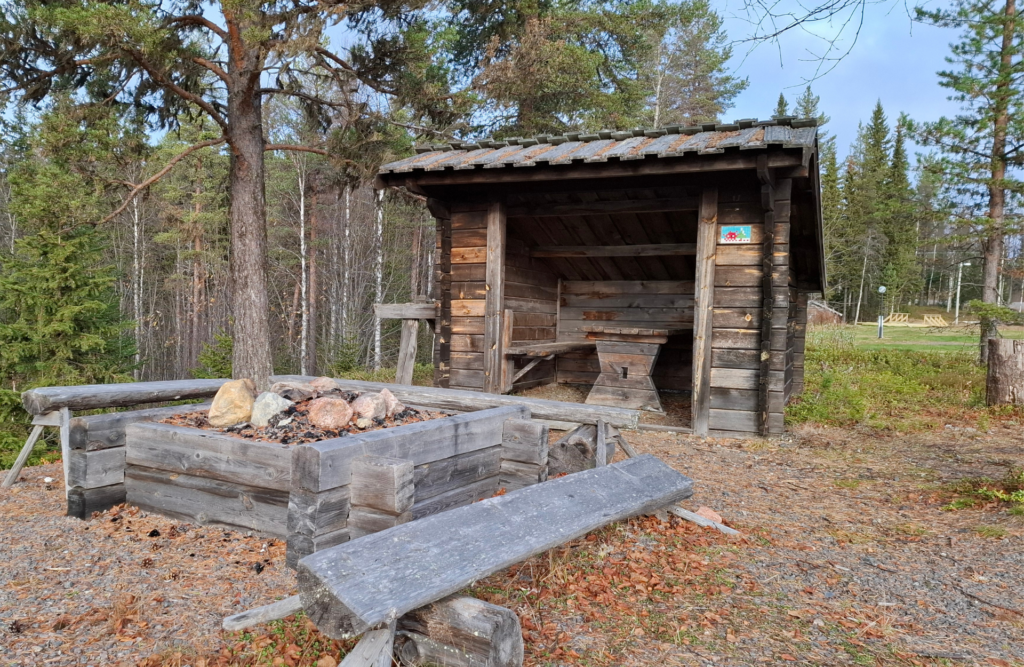
Far from the façades of major cities, several of Invader’s mosaics have found a place on wind shelters and other buildings at popular excursion destinations. Here, works can be seen on Snipen in Luleå municipality, at Mittisjön in Kalix municipality, and at Grodkällan and Lauker in Arvidsjaur municipality. Photo: Matilda Mattsson Fröjd (1 & 2), Linda Henriksson (3), and Madeleine Löf (4).
The art opens the door to the place
Lilian describes the first visitors as devoted fans who travel the world to find Invader’s works. Many of those she has met are between 25 and 40 years old and have never before been this far north.
The mosaic has been the reason to come, but visitors have also taken notice of their surroundings. They have described how beautiful and special they find it. One man said he wanted to return with his wife.
“I think this type of art can introduce a different target audience to this part of Sweden. It’s rewarding to see the destination reach people who might not otherwise have sought it out,” says Lilian Fors.
Some of the art hunters who have arrived during the restaurant’s opening hours have also stayed to eat. Others have knocked on the door when it was closed.
The experience at Kattilakoski offers an early example of how international interest in art can lead to both new trips and visits to local businesses. The art hunt moves people between towns and gives them a reason to stop in places in Norrbotten they hadn’t known about before.
An unexpected request
Contact ahead of the installation came through a third party, who asked whether a work could be placed inside the restaurant. At the time, Lilian Fors and her husband Taz Huggins were not familiar with the artist.
“At first we thought, ‘What is this?’ But then we felt, ‘Why not?'”
As Lilian understood it, Invader had been searching for locations on Google Maps ahead of his trip to northern Sweden. The restaurant’s building and large windows had caught his interest.
They were also told that the artist had a large following, and that they shouldn’t be surprised if people came to see the mosaic.
“We thought to ourselves, ‘Sure, but who would travel here just for that?’ We had never experienced anything like it before.”
Since then, the restaurant has received both visits and messages from people wondering how they managed to get an Invader piece indoors.
Art, however, is nothing new at Kattilakoski. Works by local artists and photographers have been on display there before, and a textile exhibition was shown over the summer. Now, another form of expression has found its place.
“We have no plans to take it down. It will become part of the restaurant’s history,” says Lilian Fors.
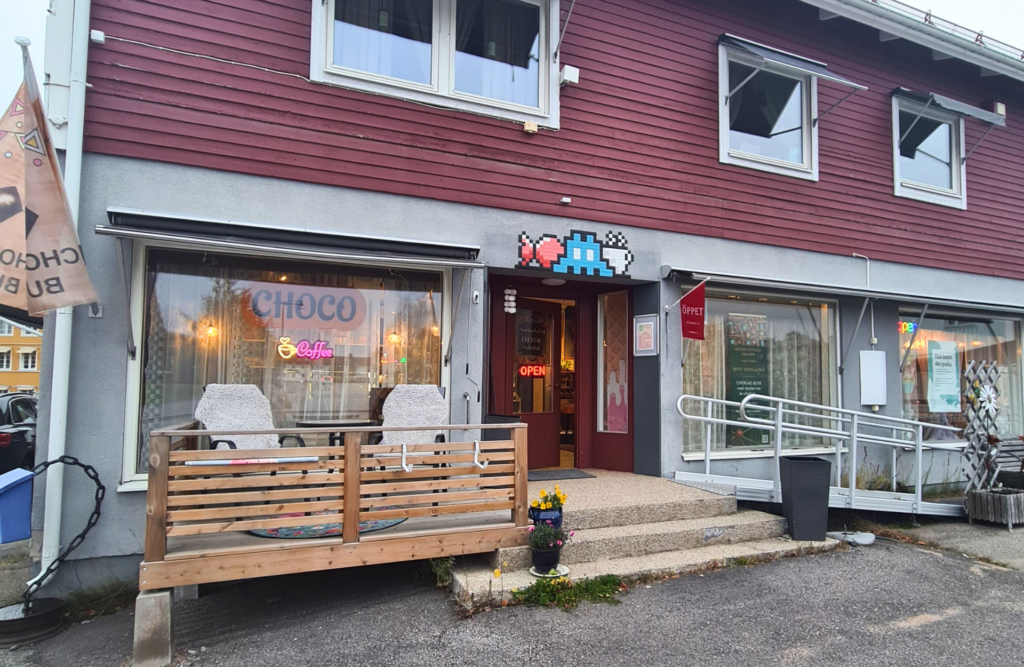
Like Kattilakoski, several other hospitality businesses have received works by Invader on their buildings. Here, above the door to Choco/Sweet Treats by Pavli in Pajala. Pavli was contacted ahead of the visit and was also able to give input on the design. Photo: Pavlina “Pavli” Novakova.
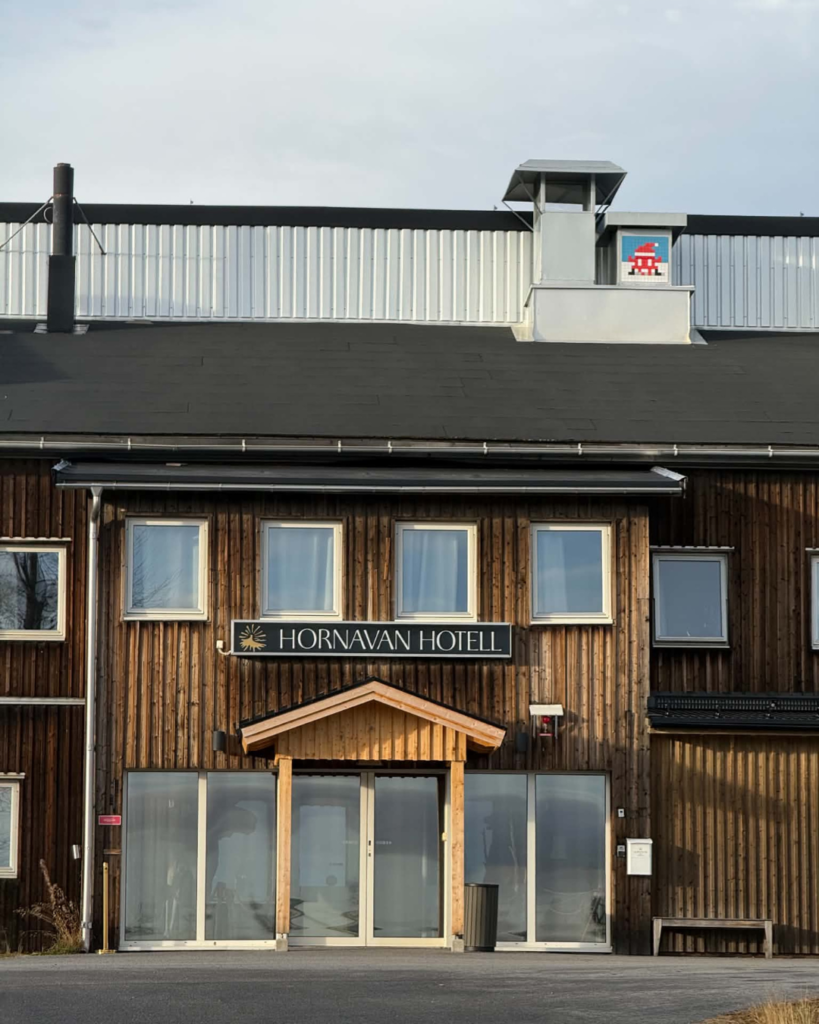
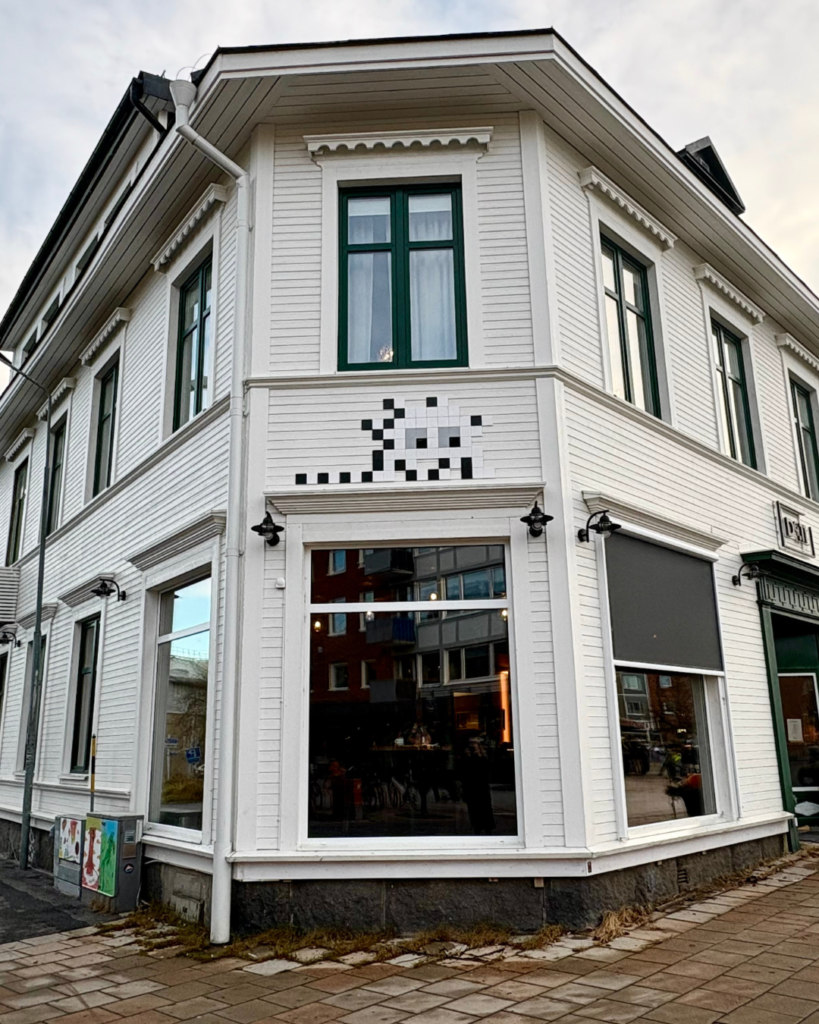
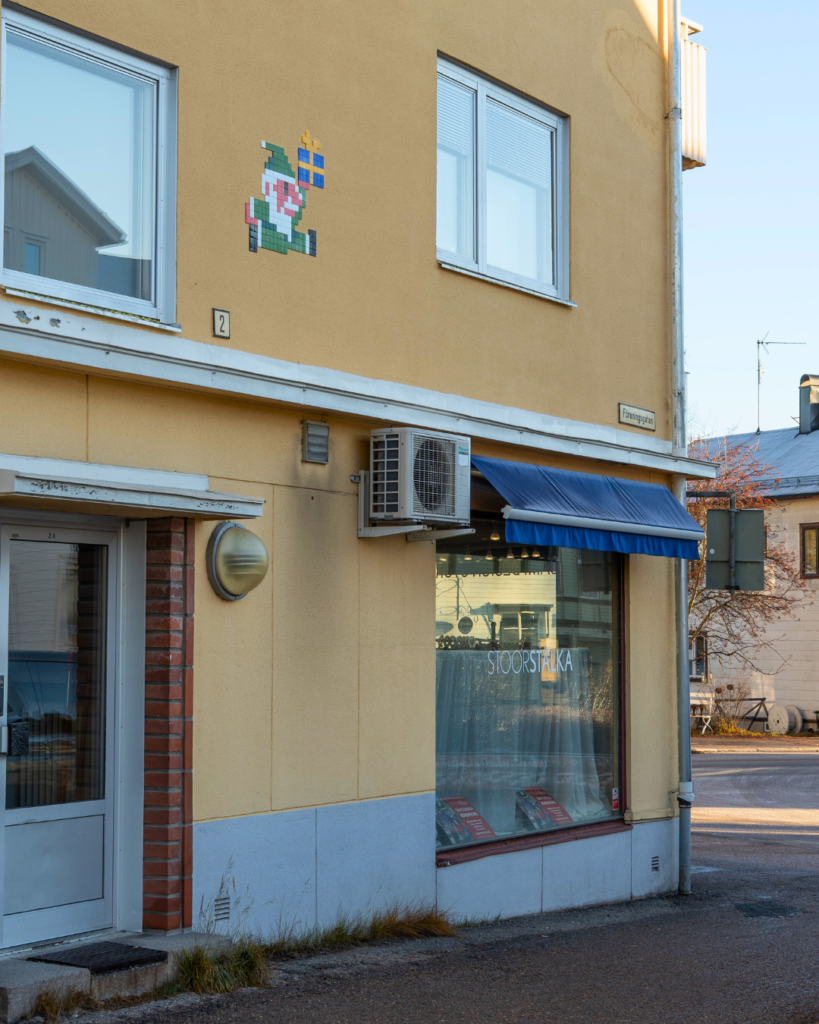
Hornavan Hotel in Arjeplog municipality, DG11 restaurant in Boden, and Stoorstålka shop in Jokkmokk. Photo: Anna Söderberg (1), Annika Fredriksson (2), and Juhán Niila Stålka (3).
Street art with an international audience
Street art has gone from an illegal rebel movement to taking its place in major museums and auction houses, and several of the movement’s best-known names reach audiences far beyond the art scene itself. Invader belongs to the same generation as Banksy, whose works have been exhibited at some of the world’s largest art institutions. Auction prices, too, reflect the impact these artists have had. Banksy’s Love is in the Bin sold in 2021 for the equivalent of around 220 million SEK. Invader’s mosaic work TK_119, depicting the manga character Astro Boy, sold at Sotheby’s in New York in 2019 for the equivalent of nearly twelve million SEK.
But the works on the streets play a different role than those sold at auction. Invader’s TK_119 is what’s known as an “alias,” a copy that Invader himself created of one of his street art pieces in Tokyo. The mosaics in their original locations are meant to stay there. On his website, the artist explicitly distances himself from having them removed and sold.
Instead, the collecting happens through the camera. In his own app, FlashInvaders, users earn points when they find and photograph the works. In this way, the art hunt connects an international audience with very specific locations.
A new part of the region’s cultural offering
Invader’s art adds something new to the cultural offering that already exists in Arctic Sweden. The visits to Kattilakoski show how a particular interest can lead people to discover a region they haven’t visited before. Even for those of us who live here, the art hunt can be a reason to see our surroundings with new eyes and discover places we might not otherwise have visited.
Interest in Arctic Sweden is growing among visitors from France. During 2025, just over 85,000 French guest nights were registered in Norrbotten, an increase of 120% compared to the previous year. This growth has continued into 2026: during January–September, French guest nights increased by approximately 30% compared to the same period in 2025. The fact that the majority of art hunters who have visited Kattilakoski so far are French shows real potential to build further on this interest. The hope is that Invader’s works will further strengthen awareness of and attraction to our Arctic destination, not least among French-speaking travelers.
Arctic Sweden Visitors Board is now developing a digital travel route to help visitors find their way between the artworks while also experiencing the best that Norrbotten has to offer — from food and accommodation to nature and cultural experiences along the way.
“Art can be what sparks the curiosity to travel here. With the guide, we want to help visitors discover more once they’ve arrived: a restaurant along the way, accommodation worth staying an extra night for, or a place they’ll want to return to. That way, interest in the mosaics can also create opportunities for more local businesses,” says Matilda Mattsson Fröjd, Social Media Manager at Arctic Sweden Visitors Board.
Explore the travel route (continuously updated): https://www.swedishlapland.com/map-stories/street-art-roadtrip/


